
Friends, henchmen and runs
Both are supported: group with players or fill the party with henchmen from the party window in any town or outpost.
Guild Wars Afterlife can be run with other players or with henchmen, and that single line from ArenaNet's announcement answers the question most returning players ask first: can I do this without a group. Yes. The DLC supports both, on a mode that resets your build every trip, which makes the choice between people and NPCs more consequential than it is in a campaign.
The store page backs it up with feature tags: single-player, multiplayer, online co-op, online PvP and MMO. Afterlife is not a solo-only mode and not a group-only mode. It sits on top of Reforged, which has supported both since 2005.
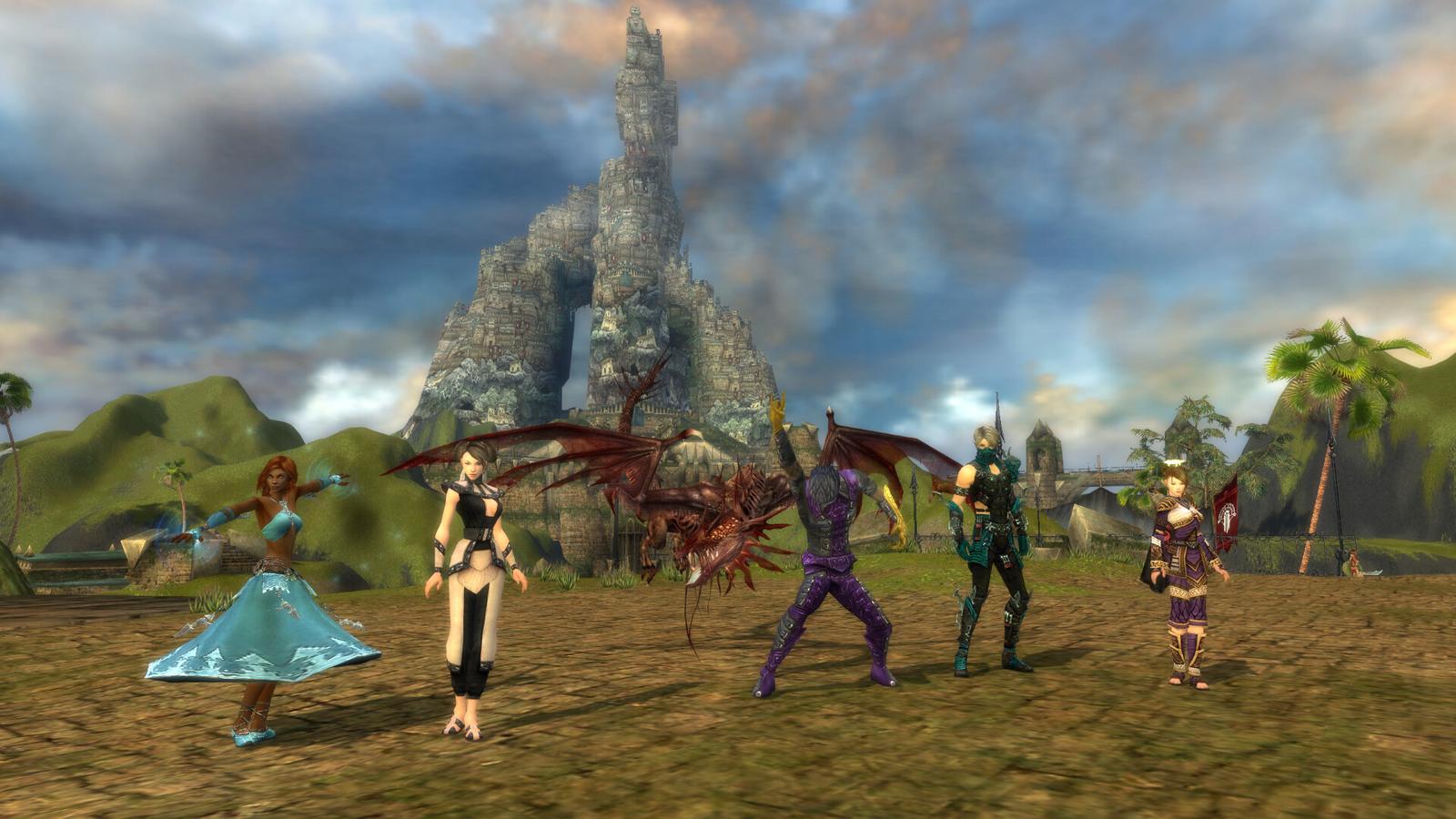
Henchmen, briefly
Henchmen are the original game's answer to "I do not have a group". They are NPC allies you hire in a town or outpost, added through the party window, and they fill your party until it is full. They have fixed builds and fixed behaviour: you do not gear them, you do not respec them, and you do not command them beyond the game's basic controls.
For Afterlife, that means henchmen give you a complete party without scheduling. The trade is flexibility: a henchman will not adapt to a drafted skill bar or a boss you have not seen, because it cannot.
| Option | How you fill the party | Strength | Cost |
|---|---|---|---|
| Friends or guildmates | Invite players in a town or outpost | Adaptable builds, coordination | Requires people to be online |
| Pick-up players | Party with strangers | Available when friends are not | Variable builds, variable patience |
| Henchmen | Add NPCs from the party window | Always available, predictable | Fixed builds, no adaptation |
Why drafting makes grouping harder and better
In a normal Guild Wars dungeon, a party can plan before entering. Everyone knows their role, the bar is fixed, and the run is execution. The Unformed breaks that: your skill bar is assembled during the run from offers that differ per player.
Two consequences follow.
Coordination moves inside the run. A party that has played together will be talking about draft picks mid-run, not just targets. That is a new kind of social play for Guild Wars, and it is the most interesting thing about grouping in Afterlife.
Roles are less fixed. If everyone can draft across professions, the question stops being "who is the monk" and becomes "who took the protection skill". That is a genuine change from twenty years of party composition.
For henchmen, the opposite applies. They bring fixed builds into a mode built around flexible ones, which means solo runs will lean harder on your own drafting decisions.
The practical case for henchmen
Three situations where henchmen are simply better than people.
- Learning the dungeon. Your first runs are for understanding how the draft works. Henchmen do not care if you take twenty minutes.
- Playing on mobile. A phone or tablet session is easier to start with NPCs than with a group that expects voice chat.
- Running at odd hours. Henchmen are available at 3 a.m. on a Tuesday.
None of that is unique to Afterlife. What is unique is that the reset makes henchmen runs cheap: because progression and inventory evaporate inside the Unformed, the gap between your own gear and a henchman's fixed build matters less there than it does in a campaign zone.
The mechanic itself is old and simple: in any town or outpost, click a henchman and then the plus symbol next to their name in the party window, and repeat until the party is full. There is no cost, no contract and no upkeep. What you give up is the ability to change their build, which is exactly the thing Afterlife's drafting system asks you to change about your own.
The practical case for people
The reverse is also true. Drafting rewards information, and four players see four sets of offers. A group can cover more of the pool than a solo player plus henchmen, and the story beats land better with someone to talk to.
If you have a guild, this is the mode to bring them into. The runs are short by MMO standards, the failure state is cheap, and the variation means nobody has to pretend to be excited about the same dungeon for the tenth time.
Setup before launch
Three things are worth doing now, while the DLC is still two months out.
- Confirm your Reforged account works. Afterlife requires the base game, and henchmen are available from the first outpost, so a working Reforged install is the whole prerequisite.
- Decide which character you will bring. The announcement says existing characters, and permanent rewards apply to them, so the character you enjoy playing is the right one.
- Find one other person. Not a full party — one player who will run the dungeon with you once. The drafting conversation is the part of Afterlife that reads best with a second opinion.
Starting from nothing? Read the Reforged primer first. To know how the drafting actually works before you commit to a group, read skill-drafting combat.
Checked 2026-11-05 against ArenaNet's announcement (Steam news, 2026-11-03), the Afterlife Steam store page (app 5149500) and the Guild Wars Wiki entry on henchmen.
Next in the dossier
- What is Guild Wars Afterlife? — The product, the price and how it relates to Reforged.
- Release date and platforms — January 13, 2027, four storefronts, nine languages.
- Price and pre-purchase — The 20% discount and the real total with Reforged.