
The Unformed dungeon
A dungeon rebuilt every run from jungles, cenotes and floating ruins, with a starting loadout chosen on entry and new maps, bosses and encounters each trip.
The Unformed is Guild Wars Afterlife's dungeon, and the single most useful thing to understand about it is that it is assembled per trip rather than authored once. ArenaNet's announcement says no two trips are the same: after you pick a starting loadout, the Mists produce a lineup of maps, encounters and bosses for that run. The three environment types named on the store page are jungles, cenotes and floating ruins.
That structure changes how you prepare. You cannot learn a fixed route, you cannot bring a fixed build, and you cannot carry your gear in — the store page states that character progression and inventory evaporate in the Unformed Mists. What you can control is the loadout you start with and the choices you make as the run unfolds.
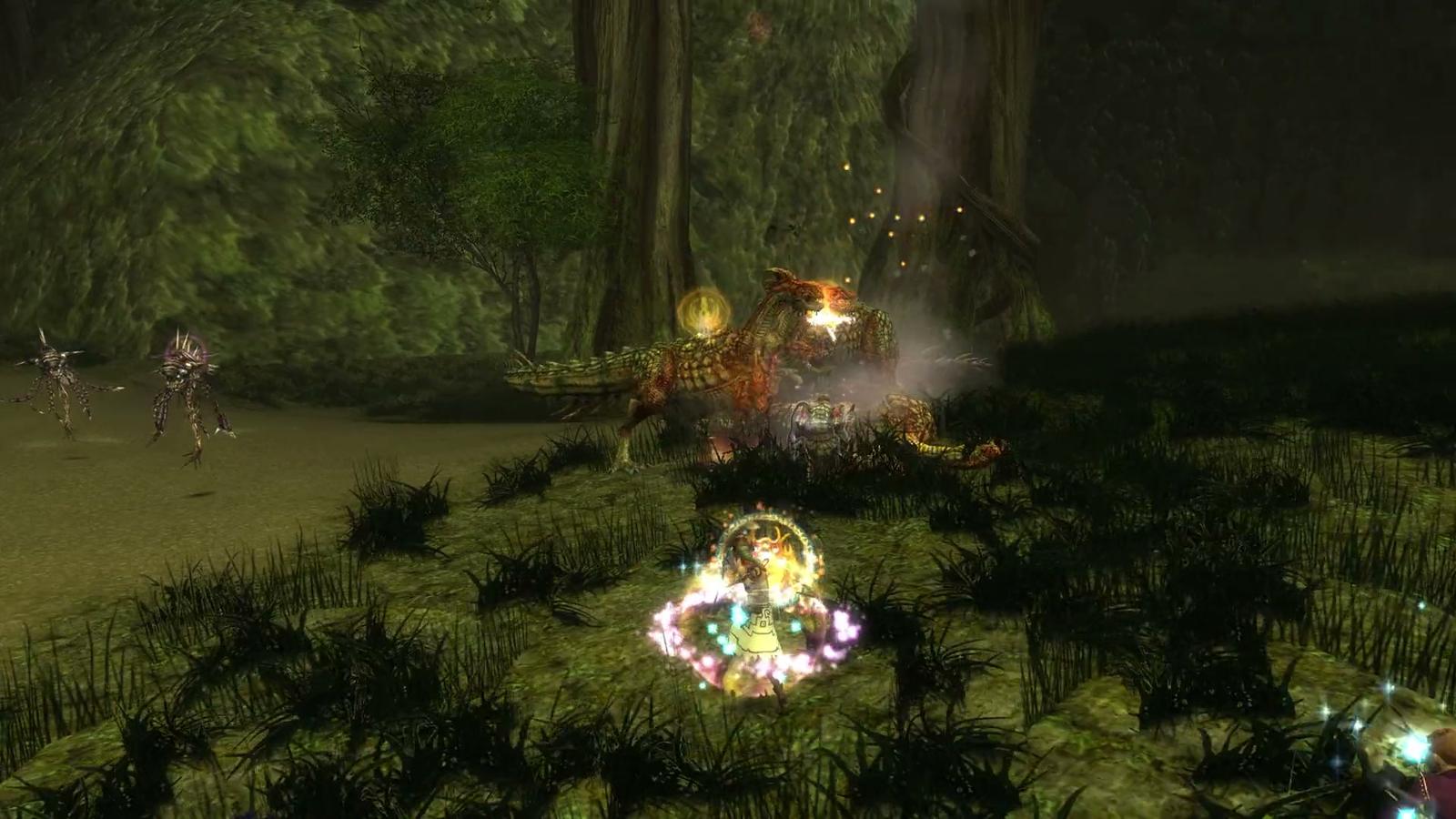
What a run looks like, phase by phase
| Phase | What happens | Where it is described |
|---|---|---|
| Entry | You choose a starting loadout | Announcement, store page |
| Assembly | The Mists build maps, encounters and bosses for this run | Announcement |
| Descent | Skill drafting offers new abilities as you progress | Announcement |
| Combat | Nightmares, Ancient Golems and other foes | Store page |
| Resolution | Run rewards and permanent rewards | Announcement, store page |
The order of the middle three is the part worth reading twice. Drafting happens during the run, not before it, which means the dungeon is simultaneously the content and the build screen. In a normal Guild Wars dungeon you arrive with a plan; here the plan arrives in pieces while you are already inside.
The three environments
ArenaNet names three, and they are visually distinct enough to matter for how a run feels.
| Environment | What it is | Where it is named |
|---|---|---|
| Jungles | Dense canopy, roots and carved stone in the official screenshots | Announcement, store page |
| Cenotes | Water-filled sinkholes with sheer rock walls | Store page |
| Floating ruins | Stone platforms suspended in the Mists | Store page |
A cenote, for anyone who has not met the word, is a natural pit or sinkhole formed when limestone collapses and exposes groundwater. They are common in the Yucatán and they are exactly the kind of place a dream-jungle would grow around. The official screenshots lean on that image: water below, roots above, stone that was carved by someone.
The floating ruins are the most explicitly Mists-shaped of the three. They are the part of the dungeon that could not exist on Tyria, and they are where the "memories and dreams bleed into reality" line from the store description does its work.
The three environments also explain the visual range of the marketing. The store screenshots show a jungle path with carved poles under a pink-violet sky, a stone temple with floating mechanical elements, and a night scene lit by portals. Those are not three different expansions; they are three rooms the same dungeon can assemble.
Why your progression and inventory vanish
This is the design decision that separates the Unformed from every other dungeon in the game. Guild Wars characters are built over hundreds of hours: armour, weapons, runes, insignias, a carefully assembled skill bar. The Unformed takes all of that away for the duration of the run and hands you a starting loadout instead.
Two effects follow. First, the dungeon is playable by any character regardless of how geared they are, which is why the announcement can promise that long-time adventurers and newcomers face the same challenge. Second, the reward loop has to work differently, because loot cannot simply be an upgrade to what you brought.
Which is where the two reward tracks come in. ArenaNet describes rewards that impact future dungeon runs and permanent rewards you can enjoy outside Xotecha. The first track feeds the dungeon; the second track feeds your account.
Grouping: friends or henchmen
Runs work with other players or with henchmen, the NPC allies Guild Wars has used since 2005. Henchmen are added in a town or outpost through the party window, and they exist precisely so that a player without a group can still fill a party.
For the Unformed, that matters more than usual. If the build changes every run, a pick-up group has to coordinate on the fly rather than execute a known plan, and henchmen remove the coordination problem at the cost of flexibility.
How to think about the dungeon before launch
Treat it as a roguelite inside an MMO. The loop is: enter, draft, improvise, finish or fail, keep something, go again. The content is the variation, not a hand-authored route, so the value of a run is in the combination you get rather than in seeing a specific room.
That also sets expectations for the first week. There will be no route guide worth writing on day one, because the point is that the route changes. What is worth learning early is the drafting pool, the reward tracks and which starting loadouts survive the first few encounters.
The starting loadout is the part of the run you control completely. Everything after it is a response: to the map the Mists built, to the enemies in it, and to the abilities the draft offers. That is a different posture from the rest of Guild Wars, where preparation happens in town and the mission is execution.
Checked 2026-11-05 against ArenaNet's announcement (Steam news, 2026-11-03), the Afterlife Steam store page (app 5149500) and the Guild Wars Wiki entry for henchmen.
Next in the dossier
- Nightmares and Ancient Golems — Two enemy families and a returning adversary.
- The Cult of Odran — The antagonist faction, and what the sources establish.
- Rewards and progression — Run rewards versus permanent rewards, and what resets.